
Chapter 6 – AFTER VICTORIA'S DEATH
(Post scriptum six months after Chapter 5)
Over Christmas 2010 Berlingske told the story of the sick, orphaned girl Victoria and a Danish woman, Cecilie Hansen, who went to Nepal to try to save her. She didn't succeed. But the story of Victoria didn't end there. Cecilie recently went back to Kathmandu.
Over Christmas 2010 Berlingske told the story of the sick, orphaned girl Victoria and a Danish woman, Cecilie Hansen, who went to Nepal to try to save her. She didn't succeed. But the story of Victoria didn't end there. Cecilie recently went back to Kathmandu.
By Line Holm Nielsen & Mads Nissen (photo)
Somewhere on the world seas a container sits on a rolling ship. In the past month, it has travelled from a residential street in Gentofte, Denmark, across the Atlantic by way of Miami and across the Pacific on gigantic ships. Soon it will be put on a truck in Calcutta, India, and make its way north to the capital of Nepal.
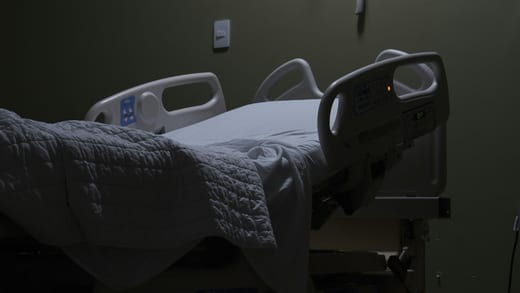
Squeezed into the container are nine incubators, an operating table, hospital beds, wheelchairs, a mobile x-ray machine, an ultrasound scanner and boxes full of surgical suture thread and syringes. It's packed with equipment no longer needed in Danish hospitals.
On its way into Kathmandu the truck carrying the container will cross the black, lifeless river where Victoria now rests. After she died, she was taken from the hospital's intensive-care unit to the crematorium on the edge of the city and her ashes scattered on the river. Since then, winter has come and gone, melting water has flooded down from the world's highest mountains to wash away any trace of Victoria.
But her story isn't over. Very soon, when the container and its contents from Denmark arrive at two hospitals in Kathmandu, a new and hopefully brighter story will begin. In Victoria's name.
Over Christmas 2010 Berlingske told the story of a seriously ill girl, just 18 months old. We had found her by chance a few months before, in a back room at Paropakar Hospital in Kathmandu. The girl was born with a cleft spine which prevented fluid flowing from the brain – a condition easily treated in the West, but not at the run-down neonatal clinic in Kathmandu. They had neither the skilled staff nor the equipment to help the girl, doctors said with a shrug and sad eyes.
Because of the excess fluid welling in her head, the girl's skull grew to an abnormal size. She couldn't walk, talk or sit up. Her mother abandoned her shortly after giving birth, leaving her to lie alone, wrapped in green sheet, on a chair surrounded by a rusty sink, torn curtains and a stuffed toy animal to look at. The nurses had stopped treated her bedsores and infections with antibiotics. There was no point. They were only waiting – and for her own sake, hoping – for her to die. She hadn't even been given a proper name.
Berlingske carried a photo of Victoria and a few paragraphs about her story in late summer, 2010. She wasn't central to the story that we had initially gone to Nepal to research. But we simply couldn't let go of that image of her, and the misery and despair that she symbolised.
Many readers responded to the photo. »Someone's got to do something!« or »Who is responsible?« were typical reactions in their letters.
Cecilie Mose Hansen, mother of one-year-old Sebastian and PA to one of the top executives at the shipping giant Maersk, took the matter into her own stubborn hands. Six weeks later we travelled with her back to Nepal to document the events that the little photo had set off. After weeks of research, Cecilie managed to contact a neurosurgeon in Kathmandu, Dr. Basant Pant, who agreed to try to help the girl – paid for with Cecilie's savings.
Over 12 dramatic days the Danish woman was handed responsibility for the girl whom Cecilie chose to name Victoria. The girl was examined, scanned, bathed for the first time in her life, and then operated on at Dr. Pant's private hospital, Annapurna.
Why? Cecilie has pondered that question over and over. Why Victoria? Why not just give all that money to people suffering in Africa, Haiti, or Pakistan? But for Cecilie, the journey to Nepal had nothing to do with charity. Charity is based on strictly necessary calculations: where can you help the most with the least amount of dollars? The Red Cross or other charities can't help just one chosen child because they like her pretty eyes.
"I didn't go to Nepal to save the world. So I find it hard to help the people who have contacted me since because they want to do something similar. I just didn't think in terms of a bigger picture. I responded as a private individual to a specific child who spoke to me in some special way," Cecilie says.
The little girl with the enormous head posed a moral and medical dilemma to everyone involved. Victoria's condition was so advanced that any treatment would be risky – even at a hospital like that run by Dr. Pant which, although expensive for Nepal, still lacks basic equipment.
On the other hand, Victoria would most certainly die if nothing was done. Cecilie decided that, at least, the girl had to have a chance. Dr. Pant was optimistic when he and Cecilie said goodbye in the middle of November. Cecilie was nervous and sad after two weeks of close contact with Victoria, having even slept in the same bed.
One week later a text message arrived from Dr. Pant in the middle of the night. After the second operation Victoria had seemed all right. But out of the blue, her heart stopped. In just a few lines of text on Cecilie's mobile phone screen the success of the preceding weeks turned into a sickening mess of responsibility and guilt, loss and raw sadness. Had she done the right thing for Victoria?
"Until the newspaper told the story a month and a half later, I lived inside a cocoon. I wasn't ready to face any questions. At first, I could hardly even speak about it. It still makes me sad to talk about it in any detail," Cecilie M. Hansen says.
But talking about Victoria's death has been a necessity – and an opportunity.
The stories in Berlingske over Christmas 2010 provoked a storm of responses from the readers, and since then the photos and the story have featured on Danish television as well as in leading dailies across Britain, Ireland, Norway, France, Germany and Italy. The pictures of Victoria and Cecilie have won awards at the World Press Photo contest, and there is even talk of a feature film.
Many people, at home and abroad, have donated money to Cecilie's newly founded "Victoria Foundation," the aim of which is not to pay for Victoria's treatment (which Cecilie paid for herself) but to raise money for "all the other little Victorias" at the two hospitals where Victoria was born and died. The foundation has raised more than 100,000 Danish kroner by now (about 20,000 dollars).
Perhaps more importantly, after the story was published, Cecilie was contacted by doctors and nurses wanting to donate used hospital equipment. Seven hospitals and corporations in Denmark volunteered equipment. And when Cecilie's employer offered to cover the costs of shipping a container from Copenhagen to Kathmandu, it all came together. Although it has been a »logistical nightmare«, she says.
One day in May Cecilie arrived home from work to find a container with medical paraphernalia outside her house and two incubators and a wheelchair lined up in her driveway. Her husband and father spent the weekend repacking and strapping in all the equipment before sealing the container.
"I never saw my work with the foundation as something I had to find the energy for, rather as something born of Victoria's fate. It's a consequence of the choices I made when I decided to get involved in her life. You can't just stop. I sometimes have to remind myself that it's cool for so many good things to have happened despite her death. But it's still taking the place of something that I would rather had happened," Cecilie says.
When the newspaper published the fifth and last chapter of the series, it was too soon for Cecilie to put words to the meaning of it all. If there is one. It was too soon to describe what she had learnt or how Victoria had changed her and her family's life. It's easier for her now, mainly because she and her husband, Christian, have been back in Kathmandu.
It was the end of March and the mountain-climbing season – warm but with crystal-clear air – had started in Nepal when Cecilie and Christian walked into the Special Care Unit, the neonatal ward at the state hospital, Paropakar. No one questioned why as the two strikingly tall Danes put on half-dirty smocks, tucked their feet into plastic sandals far too small, and opened the double doors.
Like six months before, twelve or thirteen prematurely born infants lay in rows of cots, wrapped in green linen and cheap pashmina wool under the blue glowing lights. Here, in the third room, is where Victoria lay staring at the ceiling for most of her life, as her head grew bigger and bigger. This was where the story began.
Now it's all very different. The excess frames and rusty cots had gone, the chair where Victoria had laid stood neatly in the corner, and there were two more beds. The room was beginning to resemble a normal hospital room – a bit cosier and more human.
Cecilie felt ambivalent about returning.
She had decided to donate 30,000 kroner from her Foundation to the hopelessly run-down birth clinic and the thousands of women who give birth there every year. They are short of everything: tumble drier, ceiling lights, even dummies for the tiny babies taking turns to cry themselves to sleep in the neonatal ward.
The head of Paropakar, Dr. Lata Bajracharya, was thrilled with the donation. Back in November, the busy smiling woman in a brightly coloured sari and gold-rimmed spectacles had allowed Victoria to be put into Cecilie's care. Some of the money may be used to offer more 12 week scans for pregnant women to detect babies with debilitating spina bifida early.
"Dr. Lata said that I taught them all something about responsibility and care of thought, that I was an angel. But really, I didn't do anything they couldn't have done themselves, if only someone had made a noise," Cecilie says.
But this time, the more Cecilie spoke to Dr. Lata, the more she realised that Dr. Lata never knew much about the baby hidden away in her own hospital – not until Cecilie called. Culturally, the Nepalese are very respectful of authority. Maybe none of the nurses or doctors in the ward had explained the matter to Dr. Lata. Maybe it was no one's fault, just a result of poverty and misguided politeness.
But it was hard to meet Dr. Lata's husband and discover that he is a neuroscientist specialising in the spine. And it was hard to walk the 20 metres across the road to the neighbouring private hospital, a large white building where a sign saying »CT SCAN« greets you.
Dr. Basant Pant works here several times a week. He never heard about the unusual child on the other side of the street.
"I really had to bite my lip to not say something angry. I have searched in vain for an explanation as to why Victoria didn't get help sooner. Then perhaps she wouldn't have died. Was it malice or incompetence? It would be unforgivable. But I just don't think it was ignorance, so it's difficult to pin the blame anywhere specific. In that sense, there isn't much of a guarantee that it won't happen again," Cecilie says.
Cecilie's hopes are with Dr. Basant Pant, as they were last autumn.
With his cheap generic supplies from India and patients diagnosed far too late, he has lost many patients in the past. Children too. Some colleagues think that he takes on too many hopeless cases. But Cecilie sees herself in him. Dr. Pant likes finding solutions. He likes to take charge, even if he gets bruised on the way. And he was the only one to respond suggesting possible solutions when she first wrote to leading doctors in Nepal asking them to help Victoria.
She gave him a big hug when they met up again in Kathmandu, along with most of the money that she had collected, some 70,000 kroner from Berlingske readers and other members of the Victoria Foundation. With this money Dr. Pant intends to buy simple equipment that he doesn't yet have in his two busy operating rooms. But Cecilie wants to change the statutes of the foundation at the next general meeting, so that Dr. Pant will also be able to use some of the money to offer surgery at his private hospital for poor and chanceless sick children.
The entire medical staff at the hospital were there at the formal ceremony. They spoke of friendship between Denmark and Nepal and how much Victoria's fate had meant at the hospital.
Maya, the children's nurse, was also there, dressed in her finest white and pink sari, red lips and dark eyes. On her wrists were the two red bracelets given to her in gratitude by Cecilie back in November. Cecilie and Maya had never been able to exchange anything other than hand gestures. When Cecilie went back home, smiling, wrinkly Maya had taken over caring for Victoria and slept curled up at the foot of her bed every night. She was inconsolable when Victoria died. And she was crying now.
Maya had kept Victoria's two pink bodystockings for Cecilie, and the garland of red, green and yellow wooden elephants that Victoria had been given because she liked looking at moving colours.
Cecilie buried her nose in the pink clothes. They smelled mostly of hospital, but also just a tiny bit of Victoria, she says.
Sorrow is the price you pay for caring. Responsibility is the price you pay for getting involved. Both emotions are still with Cecilie when she thinks about Victoria.
"They will probably never go away completely," she says. But the treacherous thought that all the hard work and the love for Victoria were all in vain, is long gone. "Her death is not a defeat in itself. It's sad and a loss that will stay with me for a long time. But it's not a defeat," she says.
"I really don't know if I've found a meaning to it all. Does there have to be a great meaning to it all? It's very simple. I helped another human being, though she was beyond helping. But I discovered that there are so many other things to do."
For now, Cecilie will continue to raise funds for the two hospitals. And she is pregnant with a little brother for Sebastian. She was already pregnant when she closed the chapter of Victoria's death in Nepal and opened a new and brighter one.
Soon the container will arrive in Kathmandu with machines, operating equipment and beds. The biggest items have already been divided between Dr. Pant's private hospital and the state clinic. The nine incubators in the container from Denmark will be put in Paropakar's neonatal ward where Victoria lay for most of her life, unable to move, listening to the beeping alarms and babies crying. You can't save the world. No one could save Victoria. But the nine incubators might save yet unborn Nepalese children. In Victoria's name.

Leave a comment
Posting subscribes you to the Gangrey newsletter. Unsubscribe anytime.